
Leader Spotlight #17 -Seung Hyuk Choi
Edited by Trisha Karkhanis & Aaron Chen
1/24/20262 min read
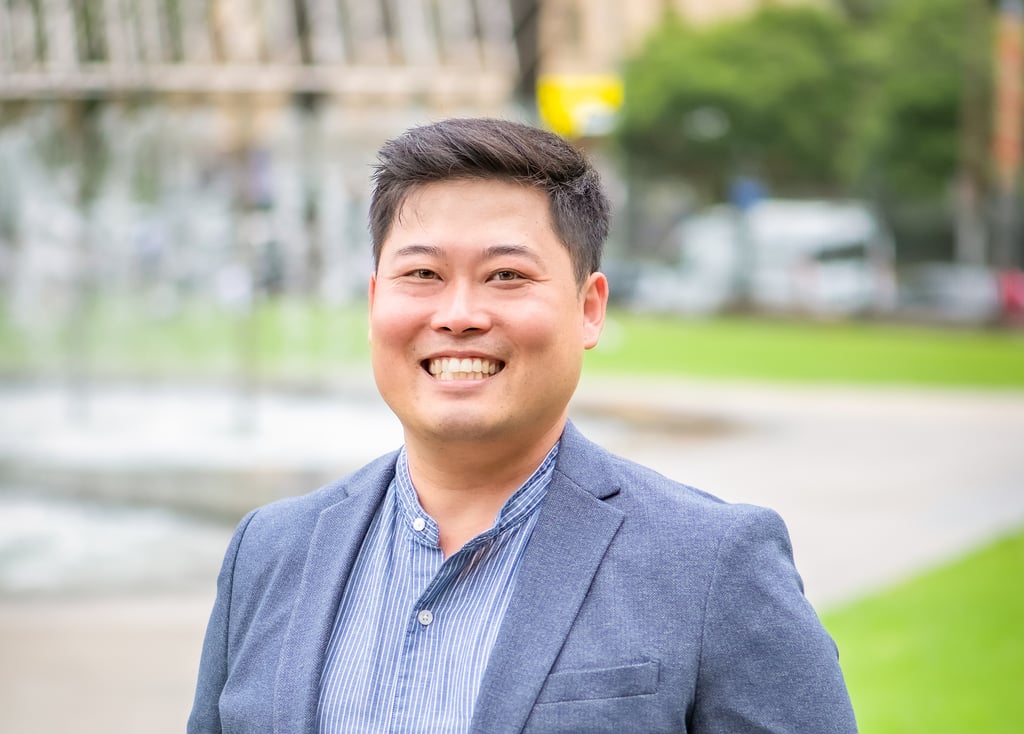
Seung Hyuk Choi is a South Korean–born Australian who currently serves as Project Director at Acuity Project Management.
Background and Inspiration: Could you share your journey into the property and construction industry and the key experiences that shaped your passion for this field?
My journey into the built environment began at the age of 13 when I studied abroad in New Zealand. That early exposure to new environments sparked a curiosity that grew stronger when I later moved to Melbourne to pursue a Master of Architecture and a Bachelor of Property and Construction at the University of Melbourne. Adding the construction major extended my studies but provided a broader, more holistic view of the industry — opening the door to career paths beyond traditional architecture.
While at university, I actively engaged with the industry through my involvement with the Australian Institute of Architects, and through teaching. These early experiences helped shape my collaborative mindset and reinforced my commitment to knowledge-sharing within the profession.
As both a registered Architect and a Project Manager, I have had the privilege of working across a wide range of sectors — including commercial and mixed-use developments, workplace, health, government, education, residential, hospitality, and childcare. Each project has expanded my perspective and strengthened my ability to lead complex teams and navigate challenges.
Today, I describe my role as a “professional client” — responsible for shaping strategy, managing delivery, and setting projects up for success well before design begins. My background in architecture provides a strong foundation in design quality and attention to detail. My current role as Project Director at Acuity demands strategic thinking, a solutions-focused mindset, and the ability to lead multidisciplinary teams.
What ignites my passion most in this industry is the opportunity to meet, collaborate with, and learn from talented peers — and to tackle complex challenges together to deliver meaningful, impactful projects.
Leadership Strategies: In your leadership role, what strategies do you use to incorporate diverse cultural perspectives, and how do these align with-or differ from-approaches you see in the wider industry?
My approach to leadership can be summarized as follows:
Leading by example
Promoting a non-hierarchical structure
Committing to continuous learning
I believe that simply discussing cultural diversity and inclusion is not enough to demonstrate true leadership. To cultivate a culture where everyone feels safe, respected, and valued, regardless of their background, I focus on being curious, transparent, and humble. I recognise that cultural blind spots can arise, and I actively seek out opportunities for respectful learning and growth.
Equally important, I make it a priority to publicly acknowledge and celebrate the contributions of diverse team members, both internally and externally, especially when their perspectives have been integral to a project’s success.
I am fortunate to work alongside inspiring leaders and colleagues, where all voices are included in key decision-making processes. Many industries still rely on traditional top-down leadership models, which can often lead to tokenism when it comes to diversity and inclusion. I firmly believe that non-hierarchical, lateral leadership fosters more authentic, meaningful inclusion and collaboration.
Future Vision: Looking ahead, what changes or initiatives do you believe would have the most impact in helping the property and construction industry better embrace multiculturalism?
Diversity and inclusion should be integral to the industry's culture, not a checkbox exercise. When embraced, they bring fresh ideas and global perspectives. True multiculturalism thrives on open-minded listening and respect.
Career progression should be basesd on merit, with equal opportunities for all. Small gestures, like celebrating cultural holidays, help normalise diversity and make it a natural part of success.