
Leader Spotlight #22 - Sonia Sarangi
Edited by Trisha Karkhanis & Aaron Chen
6/24/20263 min read
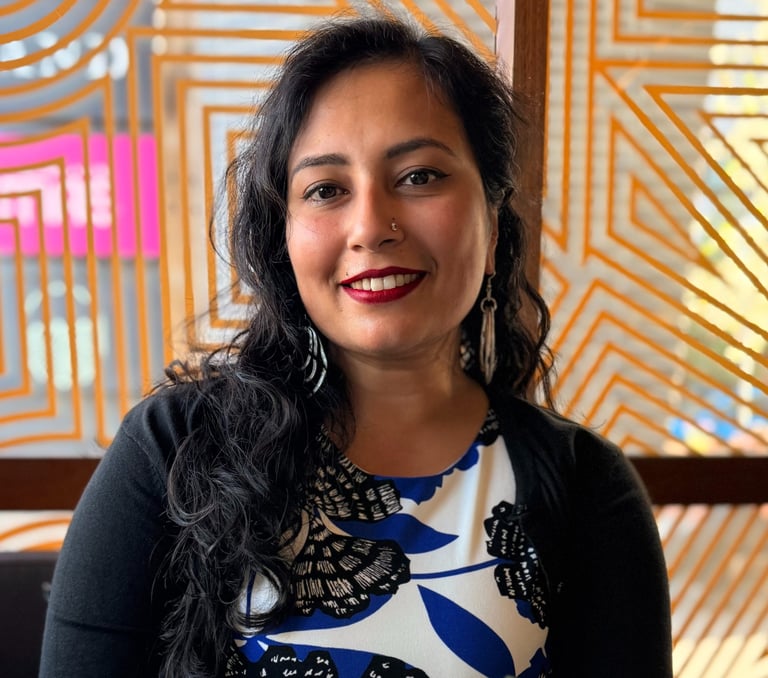
Sonia Sarangi is the Co-founder and Director of Andever and is proudly South Asian.
Background and Inspiration: Could you share your journey into the property and construction industry and the key experiences that shaped your passion for this field?
I’ve wanted to be an architect since I was eight — and no, Lego is not to blame. Looking back, I realize how unique my childhood and young adulthood was - the future, the past, and the present seemed to exist in parallel.
I witnessed Dubai’s rapid, whiplash-inducing transformation while spending summers in my ancestral village in South Asia. Later, I began my architectural education at NUS in Singapore and completed it at the University of Melbourne. Across these vastly different contexts, I experienced striking contrasts in scale, speed, ambition, and resources. Yet I also recognized enduring patterns in how people live, work, and play — and how those rhythms shape, and are shaped by, the built environment.
These experiences shaped my belief that architecture is not about spectacle or perfection, but about people and connection — about creating spaces that anchor us to deeper parts of ourselves and gently move society toward a better version of itself.
My first professional role was at a large Singapore firm, where the diversity of projects was exhilarating but the pace unsustainable. Later, more hands-on local roles during and after my M.Arch allowed me to lead projects from start to finish, revealing my strengths. In 2014, I co-founded my practice, andever, and haven’t looked back.
Leadership Strategies: In your leadership role, what strategies do you use to incorporate diverse cultural perspectives, and how do these align with-or differ from-approaches you see in the wider industry?
In our practice, we’ve typically operated as two directors with a staff member, so I’ve more frequently exercised leadership through my teaching and board roles. Across both settings, the strategies I rely on most are: empathy and curiosity.
As a former international student, I understand the significant adjustments required to adapt to new academic cultures. In teaching, I approach international students with empathy, giving space to transition into the subject matter while affirming the value of lived experiences. I encourage them to draw on those perspectives so they can contribute with confidence. With local students, my focus shifts towards encouraging empathy: I often ask them to pause, reflect, and listen more deeply — to value others’ ideas rather than rush to judgment, and to embrace nuance over certainty.
In board settings, where decisions are collective and consensus is essential, curiosity becomes paramount. I try to understand why someone favours a particular approach — whether shaped by professional training or from difficult personal experiences. While these layers aren’t always immediately clear, open dialogue consistently reveals their motivation and I am able to find common ground.
Too often in the wider industry, I see the opposite: judgment instead of empathy, and stereotypes instead of curiosity. I hope these patterns shift because it is disappointing that it is our reality in 2026.
Future Vision: Looking ahead, what changes or initiatives do you believe would have the most impact in helping the property and construction industry better embrace multiculturalism?
This question assumes we still want a seat at the industry’s table on its terms, but I believe that time has passed. From personal experience, I know that simply being included does not address the deep, structural issues and immense harm embedded in those spaces.
A seat…does not equal change. Instead, we must now build our own tables.
MAPP has the potential to help foster this, but it will take many more such initiatives and together they can form a formidable, parallel network.
I want the property and construction industry to abandons its exceptionalism and recognizes that many solutions to their biggest problems already exist elsewhere—more affordable, sustainable, and widely applied. Then we can sit as equals, with multicultural professionals asked to collaborate (vs extracted from) for our insight. We hold the best mix of mindset, skill and lived experience to solve gnarly problems.